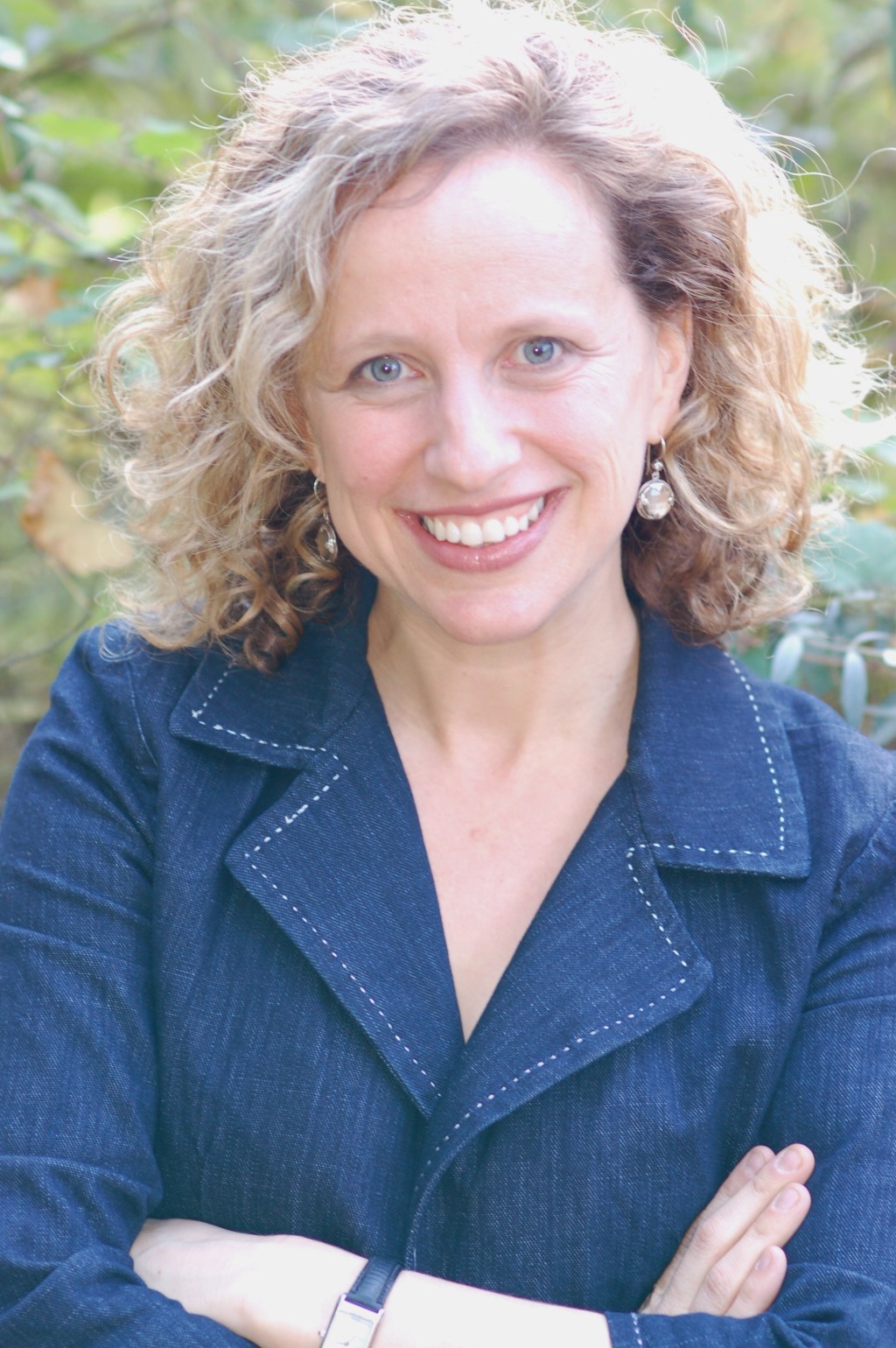
Author: Abby Sosland

  • Shivim Panim Latorah: Understanding our Humanity

    Shivim Panim Latorah: Understanding our Humanity

    Remember that time when you were planning that really important thing, and then all of a sudden you couldn’t remember what you were trying to do? You lost all motivation and all you wanted to do was sleep?  Or eat?

    What happened to your strong resolve? What happened to your commitment?

    Every so often, for many of us, the body beats the mind. We get so tired, so hungry, so “done,” that we become blinded by our physical need, and our best laid plans fall away.  It’s what cravings specialists refer to as getting to “HALT:” Hungry Angry Lonely or Tired.

    Ask anyone who knows me well;  when I’m in HALT, I can (every once in a while) be (a bit of) a drama queen.  I will admit that on occasion I have said things I don’t mean: “I’m so hungry I could DIE.”  And if you asked me to give away the most important thing in my life at a moment when I feel like I need to sleep, I might actually be willing to negotiate a price.

    So it’s hard for me not to empathize with Esav in this week’s parsha.  He arrives at the end of a long day of hunting, and his quiet brother Jacob is making a lentil soup. Sell me some of that soup, he says, ki ayef anochi,  “because I am tired.”  Jacob agrees, on the condition that Esav sell his birthright, and Esav agrees.  Hineh anochi holeich lamut, v’lamah zeh li bechorah?  “I’m about to die. Why do I need the birthright?” (Genesis 25:30-32)  The rabbinic tradition wants to vilify him, to make him a thoughtless jerk who doesn’t know the value of important things in his life. And they point to his animalistic nature, in the way that he asks for the soup, the way that he eats it. But what if Esav is not an animal at all, but just deeply, utterly human? What if he has just hit the end of his rope at the end of a long day? Perhaps the Torah is encouraging us to hear the humanity in Esav, to understand that he is simply a victim of his cravings, of his exhaustion, and of his humanness. Evidently the Torah understood the concept of HALT. The Torah understood that human beings do stupid things when their defenses are down.

    Even more, one interpretation suggests that Esav had probably learned this kind of language from his own mother.  As Robert Alter suggests, Esav’s words v’lamah zeh li bechorah (“why do I need the birthright?”) call to mind Rebecca’s words when she was struggling to have a child:  lamah zeh ‘anochi (“why me?”).  (See Robert Alter’s Genesis, p. 129.)  This beautiful connection pushes the point that Esav may have had a model in his own home of this kind of self-pity, this kind of giving up. He may not know any other way to be.  Shouldn’t we have a bit more compassion for him?

    The rabbis teach that there are shivim panim latorah, literally, 70 faces of Torah. Our trick as careful readers of text, then, is to find ourselves in each of the figures of our story. We have a responsibility to look at each Biblical character from shivim panim, through 70 faces, and to see each one as utterly human.

    Remember that time when you lost all your focus and gave up for a moment?  When you did the dumbest thing ever, just because you were tired or hungry, or you didn’t know a different way?  Most of us can remember at least one of those moments. And we must hold them in our minds when we meet Esav, or for that matter, anyone whose actions we may not understand. There are at least 70 faces to Torah. Look in the mirror; one of them is yours.
  • v’chol hachoshvim alay ra’ah:  On (not) reading the comments

    v’chol hachoshvim alay ra’ah: On (not) reading the comments

    Friday afternoon, October 31, my lovely tree-lined Upper West Side street had been transformed into a Halloween horror show. Hanging down from the buildings on my block were ghosts, skeletons, and 5-foot plastic tarantulas (my childhood terrors come to life!), and I was shaken.  I called my mom and left a message in exasperation:  “I hate my block!”

    A few hours later, I got a voicemail back.  “Abby, we got your message.  I’m so sorry you hate your blog!  Daddy and I thought it was FINE!”

    Earlier in the week, my mom and I had talked through some of her questions about this blog:  she wasn’t sure about the title and she wondered about a point I had made in a post.   Throughout the conversation, I said (more than once): “hmm, maybe you’re right.  I should probably change that.”  And more than once, she responded: “But isn’t the point of the word ‘shameless’ not to be concerned with what other people think?”  So when I called in a Halloween panic, she had reason to think I might have given up hope and closed up shop on this new adventure.

    But I’m hanging in.  And I have her to thank for it, as well as some of the other writers who have shared their own questions– and fears– about their writing.  I love that JK Rowling talked about her own fears in her commencement speech at Harvard (a must-watch speech:  https://www.youtube.com/watch?v=wHGqp8lz36c).  Or that my friend and mentor Lenore Skenazy pushes women to use their creative energies, despite their own blocks and questions.  And I’m so grateful to have seen writer Marjorie Ingall ‘s post on Facebook when a friend gave her the perfect necklace: “Never read the comments.”

    I am an old pro at reading the comments.  I’ve been doing it before blogs even existed, and without ever reading a single written word. I can walk into a room and within minutes “read the comments” before anyone has opened his or her mouth.

    I’m not saying I’m reading them correctly.  My telepathy extends far past its usefulness, most of the time. People may not even be giving me a second thought, but I can still guess what they are thinking, what they are saying, and even what they will say in two hours after I’ve left the room.

    It’s good to know I’m not the only one who worries what others think. The meditation at the end of our Amidah, attributed in the Talmud to Mar bar Ravina (Brachot 17a), reminds us that this concern is at least as old as the Talmud itself!  The prayer includes a line for chol hachoshvim alay ra’ah.  “all those who plan evil for me,” or as we might read, for all those who think badly of me…  meherah Adonai Hafer Atzatam v’kalkel machshavtam.  “Quickly, God, mess up their designs and screw up their thoughts!”

    Brilliantly, Mar bar Ravina recognized that there is a cycle that happens in our social lives, and very often, we are the instigators ourselves. His meditation begins with the phrase from Psalm 34:  Elohai netzor l’shoni mera… “My God, protect my tongue from evil.”  The more we speak ill of others, the more we might assume that others are speaking badly of us.  When we let our own judgment go, refraining from judging or commenting on others, then we can trust that we live in a world where the “comments” are not unkind.  We create the world which we inhabit, with our actions, our speech, and our own judgments.

    As for those comments I’m afraid to read?  Most of the time, they don’t exist!  People aren’t really commenting on my blogs, and as much as it may disappoint me, they’re rarely thinking about me at all! People don’t think about us NEARLY as much as we think they do.  And the meditation helps us to remember that.  V’nafshi ka’afar lakol tihyeh. “Let my soul be like dust to everyone around me.” Or, as I like to think of it, let me remember that I’m just made of dust and ashes, or, to put it more simply, no one really cares.

    Ultimately, for better and for worse, none of us is that important.  It turns out that our fears of what others think are often about as real as those plastic tarantulas that hung on my street.  They may make us shudder with terror, but they can’t do any harm because they aren’t even real!   Mar bar Ravina’s real prayer seems to be: God, help me to remember what’s important.  And help me to build a world where we all have the faith and the perspective, every once in a while, to read the comments.

  • Silent shekels:  rethinking class “participation”

    Silent shekels: rethinking class “participation”

    Walking into a Jewish high school, you’d never guess that Judaism values silence.

    And yet, the beauty of silence is extolled throughout Jewish literature. Most famous, perhaps, is the mishnah from Rabbi Shimon ben Gamliel in Pirkei Avot:

    Kol yamai gadalti bein hachachamim, v’lo matzati laguf tov ela shtikah. V’lo hamidrash hu ha’ikar ela hama’aseh. V’chol hamarbeh dvarim mevi chet.

    Throughout my life, I was raised among the scholars, and I discovered that there is nothing more becoming a person than silence; not study, but doing mitzvot (actions) is the essence of virtue; excess in speech leads to sin. (1:17)

    I know, I know. Wasn’t I JUST saying how important it is to speak up for justice? That was last week. This week, I’m thinking a lot about how it’s not ALWAYS important to speak up.  The ability to be silent is a pretty amazing trait (a tough one for me!). So then we have to ask ourselves: why do we push so many of our students to “participate more in class?”

    This week, during Parent-Student-Teacher conferences, I was reminded again of how many students continue to get the message that they have to talk in class.

    “So, do you have any questions for me?” I asked at the end of one meeting. “Yes,” said one student. “Do I need to participate more?”
    “Not sure,” I responded. “Do you WANT to participate more?”

    Some students wish they spoke more in class. Maybe they are nervous to say the wrong thing, or they feel like other students intimidate them. Those are students I want to help find their own voices. But I don’t believe that every student needs to “PARTICIPATE,” in the way that teachers so often say. Every year, parents tear up when I say it’s okay if their child doesn’t speak in class. “For 12 years, teachers have told us that he needs to speak more in class. This is the first time anyone has ever told us that it’s okay for him to be himself.”

    Why does everyone have to speak in class? I’m grateful to Susan Cain for the TED talk “The Power of Introverts” for teaching me that not everyone processes things by speaking about them.

    One student’s mother was so relieved to hear that her son could sit and listen or write his thoughts down instead of speaking them. An Asian immigrant, she said that she thinks the expectation for students to speak in class is cultural.  “In Taiwan, we were taught that silence is golden. Show humility, don’t speak too much. In America,” she said, “everyone has to self-promote.”

    So I had to ask myself, what is silence worth in Jewish culture? According to the Talmud (Megilah 18a), Rav Dimi came to Babylonia with a lesson from the West (Palestine): “Milah b’sela, mashtokei b’trein.” “A word is worth one coin; silence is worth two.”

    Think about Moses, our greatest prophet– decidedly not a big talker. “Lo Ish Dvarim Anochi,” he tells God in chapter 4 of Exodus. “I am not a man of words,” says our lisp-laden leader. (He does eventually learn to say what he needs to say, as Bible teacher Dorothy Weiss reflects. “He doesn’t shut up through the whole book of Deuteronomy!”)

    Our greatest prophet was most likely–surprise–an INTROVERT. Most of the other prophets were, as well. And when one prophet, Elijah, is outspoken, mocking the people, making demands on God, screaming and shouting, what sign does God send him? Not a storm or an earthquake, but a kol d’mama dakah. A still small voice. “Stop yelling,” God seems to be saying. “Be quiet for once!” It is in the quiet where the Divine can be found.

    It’s time we leave our introverted students alone on this “class participation” thing. We don’t need to shame them into talking more in class. My creative colleagues at Schechter have taught me well; let students write their ideas down on a class blog or share them privately with us. Not every student has to have the same personality. The rest of us (my talkative self included) have a lot to learn from these quiet learners.  If we stop talking for a moment, the silence may speak for itself.

  • Faith without works is… a good start

    Faith without works is… a good start

    Poor Noah.  The rabbis give him such a hard time. The famous Rashi teaches that he wasn’t REALLY righteous, he was just righteous in his own generation.  He never stood up to God to defend his contemporaries from the flood.  As Avivah Gottleib Zornberg argues in her book Genesis: The Beginnings of Desire, it is Noah’s lack of outrage that shows his (poor) character and his tremendous cowardice.

    If we are in any doubt about who Noah is, we have only to consider the central fact of his silence.  From beginning to end of the Flood narrative, Noah says not a word… the impact of Noah’s silent acquiescence in the destruction of the world is devastating.  (p.58)

    What a wake up call to modern readers!  I’m starting to ask myself if I might have a bit of the Noah syndrome. Too often, I choose silence over action or rightful moral outrage.  These past few weeks, when news of clergy abuse hit the headlines, I had to ask myself: what would I have done if I had heard the reports?  Would I have come forward with difficult reports about a leader I admired, or would I have defended him to his victims, saying “well, you must have misunderstood him,” or “he’s really such a good man.  He didn’t mean it.”  Would I have stood up for justice, risking my reputation or relationships to speak difficult truths?  Or would I, like Noah, have stood by in silence and allowed destruction to continue without a word?

    The title of this blog, Shameless Judaism, is only aspirational so far. I want to be someone who speaks up when necessary and who refuses to let important truths get clouded with other concerns.  But too often, fear gets in the way.

    How comforting to know that even Abram, the great champion of justice, had some fear of his own.

    Just imagine what kind of courage it took for Abram to begin a new nation, or to bring his own son to the altar, or (gasp!) to challenge God about God’s plan to destroy Sodom and Gomorrah.  Surely, this was not a man who had to conquer his own fear.  And yet, as God presented the covenant and a series of promises for Abram’s future, it’s almost as if God predicted that Abram might have some mixed emotions. “Al Tira Avram Anochi Magein Lach.” “Do not fear, Abram. I am your protector.” (Genesis 15:1)  God showed Abram the stars of the sky, saying “I will make your descendants as numerous as the stars.”  If you’re going to be the leader of a great nation, God seems to be saying, you have to start with no fear.  I know you may feel fear, but I’m committing to you:  abundance is in your future.

    What happens next is powerful, and it’s good news for those of us who want to stand up for justice, but aren’t always ready to do so.

    V’he’emin b’Adonai, vayachsheveha lo l’tzedakah.   “And [Abram] believed in God, and [God] counted it for him as tzedakah (righteousness, or justice).” (15:6) Or, to translate it slightly differently, Abram believed in God, and God gave him credit for acting justly.

    What a surprising moment!  God gives Abram credit for acting justly because Abram believed?? How is that enough? Shouldn’t faith be combined with action, through the work that we do to stand up for others?

    The Christian Bible teaches that “faith without works Is dead.” (James 2:14)  But here, in fact, the Torah seems to teach otherwise.  Of course, faith WITH works may be better.  It is true; behavior trumps belief in Jewish thought.  What we do defines us, not what we think.  But action can be hard, especially when it comes to things that require courage and commitment.  That’s why it’s good to know that sometimes God (or the God I choose to believe in) gives us credit for faith, even before we’ve done the action.  Harachaman, the Merciful One. knows how hard it can be for us to take action. God knows that perhaps the first step is simply to believe:  to believe that we CAN take action, to trust that we will be guided to justice, to know that the right will always win out.  And isn’t that a good beginning to any act of justice?

    What a relief to know that Abram got points just for having a little belief.  We may think we’re not courageous enough to be true leaders.  We may wonder if we would take the right actions when called upon to act justly.  We may worry that we will be penned in by fear at just the wrong moment.  But the Torah reminds us: it’s okay to be a beginner.  The way out of the Noah syndrome is, perhaps, simply to BEGIN with a bit of faith.  Sometimes the work inside leads to the work outside.  After all, the rest of Abram’s story is filled with acts of courage.  So may ours be, as well.

  • V’lo nevosh l’olam va’ed: let us never be ashamed.

    It’s so extraordinary that the tradition recognizes the human propensity for embarrassment.  The rabbis knew that we would need God’s help not to be ashamed, putting the line “v’lo nevosh” into our prayers TWICE each morning.  First, it appears in the paragraph before the Shma.

    V’ha’eir eineinu b’toratecha, v’dabek libeinu b’mitzvotecha, v‘lo nevosh l’olam va’ed.

    Lighten our eyes with your Torah, GLUE our hearts to your commandments, and let us  never be ashamed.

    The tradition predicts that we may get stuck in our desire to be close to Torah, because we’ll be ASHAMED.  Ashamed of what?  Looking foolish?  Seeming too righteous?  Showing that we care?  There is no explanation given, and yet each of us could find our own reasons for potential embarrassment.  Each of us approaches Torah with our own blocks, and we ask God to help us leave behind whatever stops us from living in the “light” of Torah.

    The second time these words appear is in the center of the Amidah, in the blessing for Tzaddikim, when we pray for the righteous, and for the Gerei Hatzedek, righteous converts.  Sim chelkeinu imahem, we ask, v’lo nevosh ki vecha batachnu.  Place our portion among them, we pray, and we will not be ashamed for we trust in You. Amazingly, the tradition knows that there is a chance we might shrink from our responsibilities, that we might be embarrassed to do what we know we are meant to do.  And the prayerbook gets us to ask God for help.  God, help us not to be ashamed.  Help us to trust in You so we can live among the righteous.

    It’s almost as if the Siddur, the prayerbook, is telling us what Marianne Williamson’s oft-quoted lines have been telling us.

    Our deepest fear is not that we are inadequate. Our deepest fear is that we are powerful beyond measure. It is our light, not our darkness that most frightens us. We ask ourselves, Who am I to be brilliant, gorgeous, talented, and fabulous? Actually, who are you not to be? You are a child of God. Your playing small does not serve the world. There is nothing enlightened about shrinking so that other people will not feel insecure around you. We are all meant to shine, as children do. We were born to make manifest the glory of God that is within us. It is not just in some of us; it is in everyone and as we let our own light shine, we unconsciously give others permission to do the same. As we are liberated from our own fear, our presence automatically liberates others.– Marianne Williamson

    Taken out of the Siddur, the concept is an important one for all of us to embrace.  We have to show up for our lives, to be the people God wants us to be, without embarrassment or shame.  “Who are we NOT to be?”  V’lo nevosh l’olam va’ed.

    So I’m trying it. I’ve always wanted to be a writer. And rocket scientist that I am, I have finally recognized that if I want to be a “writer,” then I actually have to, um, write. At times, it might feel embarrassing or imperfect or, for that matter, not particularly remarkable, but that has to be okay. It’s just one blog post at a time.

    I once bought my dad an empty sefer (a religious book, with a crimson binding and painted edges), entitled “chiddushim,” new ideas.  It was a journal for learning religious teachings, meant to contain the writer’s innovative ideas on Torah or Talmudic passages. Of course, my dad, one of the most humble men I know, never wrote in it, thinking it would be “yuhara“–arrogance– to consider his own musings “chiddushim.” But now that I think about it, it was a pretty silly gift. There’s no such thing as a “chiddush,” as all the ideas in the world are taken and woven from the ideas of others. As we read last week in the book of Ecclesiastes, “ein chadash tachat hashamesh:” there is nothing new under the sun.  So if we are going to accomplish anything, we can’t begin with the idea that it must be perfect, or NEW, or completely innovative, because we will never achieve anything.

    Breishit Bara Elohim… We usually read this as “in the beginning, God created.”  But Rav Dov Ber Pinson explains that for the kabbalists, Breishit is one of God’s names. Read this way, these three words suggest that in the beginning Breishit– the Infinite Presence of God– so unfathomable, whom we could never ever possibly even relate to– created a gift for humans, Elohim–a more manageable, imminent presence of God– a divine presence that human beings could strive to reach.  If we want to create anything in our lives, we can’t start with the unreachable, but we must begin with something attainable, something that we might at least feel we can try to reach.

    So hineni, he’aniyah mima’as.  I’m starting with something attainable:  a blog post.  Welcome to Shameless Judaism: Adventures in Spiritual Refinement.  V’lo nevosh l’olam va’ed.  See you next week.